AES provides support services to not-for-profit organisations.
This content requires a valid membership to access
Managing an association or a not-for-profit organisation carries significant risk of liability to both individuals and the organisation itself. In different circumstances, board members and senior managers can be held personally liable for a failure to act or their actions.
Most associations hold events or conferences for their members. In some instances, the annual conference may be the only activity an association conducts for their members, and is one of the main reasons members join the association.
Association Executive Services (AES) recently commenced work on a project for the South Gippsland Shire Council. The project includes the development of a Good Governance Toolkit. The Toolkit will be an online governance resource, designed to empower the business community in South Gippsland by helping local associations effectively and efficiently manage and grow their membership base.
Charities and fund raising drives are in the news constantly. The majority of us receive constant requests for donations for worthy causes. However, most not for profit organisations and industry associations are not charities. As such, they rely very heavily on government funding, membership subscriptions and payment for services to remain viable.
Most not-for-profit Boards and Committees are made up of volunteer members. As such, it can be difficult to encourage members to join your association’s Board or Committee—everyone is time poor these days. But, having a diverse, experienced Board offers many benefits to an association. Volunteer Board members bring with them a range of skills, abilities, expertise and experience, all of which contribute to the overall management of the association.
Are you about to send out your membership renewals? If you are, then be prepared for your association to come under scrutiny from your members. Regardless of how much growth you may have experienced in the past year, members who are undecided as to whether to renew their membership will critically assess whether your association is doing a good job.
In my many years of experience reporting to, providing advice to, and being a member of, not-for-profit Boards, one of the most common issues I’ve experienced is a lack of understanding when it comes to governance.
We recently spoke with Genevieve Newton (Chief Executive Officer, Victorian Music Teachers’ Association) about her experience with the AES Best Practice Association and Not for Profit Benchmarking Self-Assessment.
It saddens me to hear of any association experiencing financial crisis. Unfortunately though, financial crisis occurs all too often in the not-for-profit sector—associations are often forced to lay off staff, restructure or move into smaller, cheaper office space.
At one of our recent AES member meetings, the issue of membership—particularly member retention and growth—was discussed. Most associations realised their membership was either failing to grow or, even worse, declining. As such, there needs to be a simultaneous focus on both member retention and member growth, which can often be difficult with limited resources.
Associations can be very dynamic organisations. They can bring together like minded members to share information, ideas, and best practice processes within their industry or area of interest.
One of the services that AES has offered to associations for a number of years is the provision of an interim CEO. Often, this service is utilised by association boards that are in a transition phase, defined by the recruitment of a new CEO.
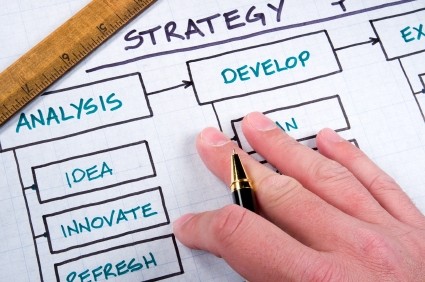
In the 2014 AES Association Best Practice Survey, we asked over 300 association leaders in Australia about the effectiveness of their strategic plan. The survey demonstrated that 74% of association leaders who had a strategic plan did not use, or refer to, this strategic plan in their decision making and review meetings. My experience as a CEO (or senior executive) managing a not for profit organisation has taught me the importance of an effective strategic plan, not only as a means of measuring an association’s performance, but as a crucial tool in assisting in communication between the Board and its employees.
How we help membership based, not-for-profit associations now and into the future.