Join
AES
Join
AES
Contact
Us
Contact
Us
AES provides support services to not-for-profit organisations.

Boards and management of associations have very different roles, and it’s important that these are clearly defined to ensure that everyone is completing their own responsibilities. Blurred lines when it comes to the roles of governance and of management can cause delays and frustrations on all sides, leading to a less successful organisation and negatively affecting the ability to achieve the overarching goals of the association.

Any association with newly elected Board members must ensure their Board members are fully aware of their responsibilities before they are appointed. A thorough induction process with key senior figures ensures individuals are able to start meaningful work on the Board from the outset.

One of the major differences between not-for-profit organisations and other entities is the reliance on volunteers. Volunteers can play an important role to support some or all of the administration activities, approve membership applications or facilitate the combined learning of the members.

Associations offer advantages to members throughout their careers and regardless of external factors, but their value is best realised when society is in turmoil. The past eighteen months have posed unprecedented challenges for people all over the world. While Australians have been relatively lucky in respect of the devastating impacts of the COVID-19 pandemic, our economy has inevitably been shaken by these global events. Being a part of an association offers members a myriad of benefits, especially during times of great uncertainty.

Ongoing lockdowns have presented an unprecedented challenge for industry associations that typically rely on in-person events and conferences to engage members and grow their membership base. With the majority of the Australian workforce now working from home, the opportunities to connect are more limited.

One of the services that AES has offered to associations for a number of years is the provision of an interim CEO. Often, this service is utilised by association boards that are in a transition phase, defined by the recruitment of a new CEO.

As we move into an increasingly digitised world, the threat of cyber-attack is growing. Regardless of the size of an organisation, cyber-criminals can infiltrate your systems and target you for payment. Payments made to cyber criminals typically cannot be recovered, so it is vital that associations understand the risks and take action to strengthen their cyber security.

I recently spoke to AES Legal Advisor John Crosby about how Copyright can apply to associations and some things to watch out for.

Many associations rely on events as a major source of revenue. With business events cancelled and postponed over the last 18 months due to COVID-19, this has significantly impacted association revenue.

One of the biggest challenges facing many associations today is the rapidly changing pace of technology. Today, new and improved technology is enabling associations to provide services, manage the organisation's day-to-day functions, and communicate with members in a way not previously possible.

Associations can be very dynamic organisations. They can bring together like minded members to share information, ideas, and best practice processes within their industry or area of interest.

Each year, association and not-for-profit Boards need to ensure that their organisation is compliant with all requirements imposed by the relevant regulators and government departments, particularly the Australian Tax Office.
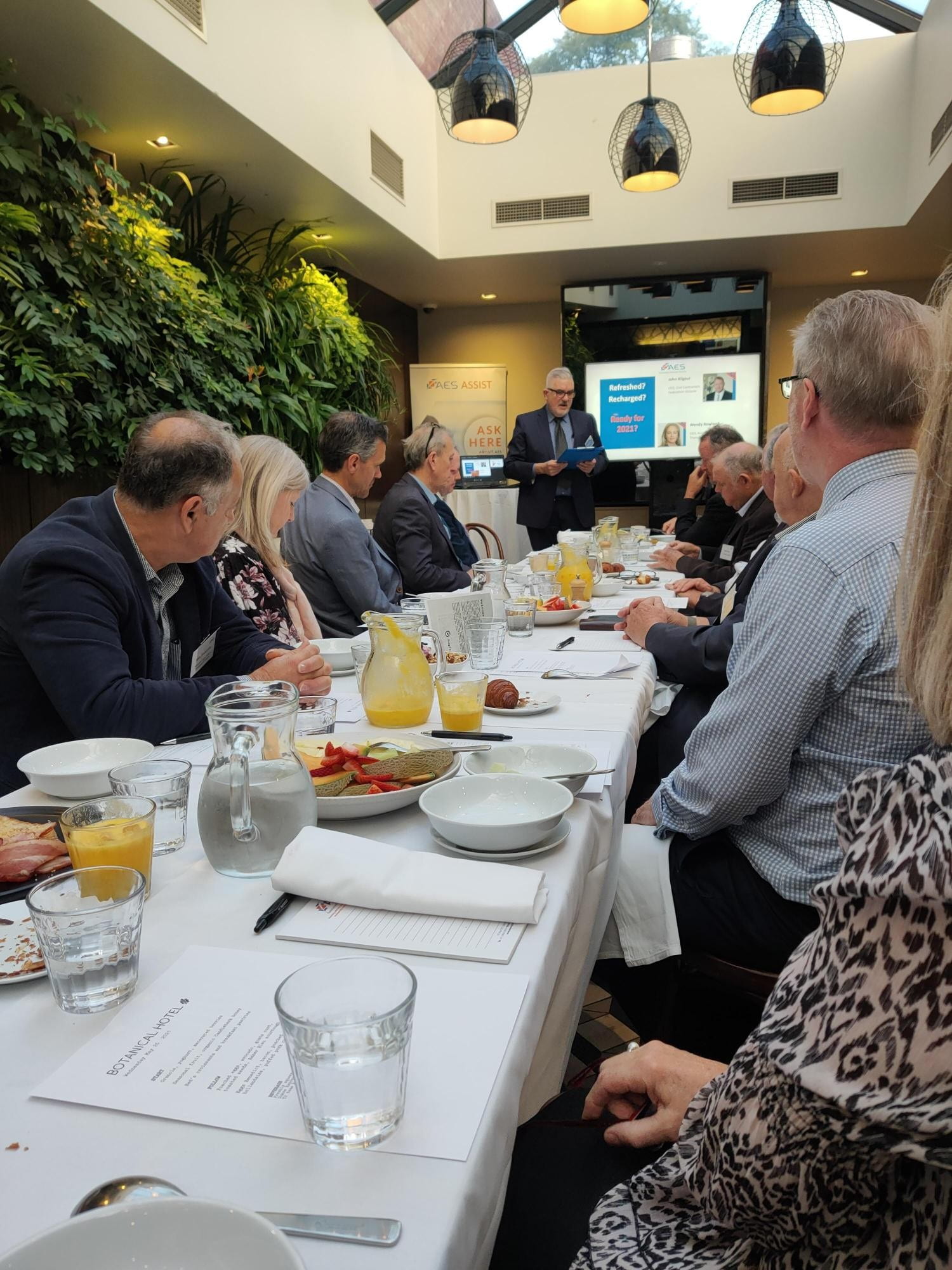
Association Executive Services (AES) hosted its first face-to-face event since COVID-19 yesterday: a breakfast attended by over 20 association leaders in Melbourne. The theme for the event was Refreshed Recharged and Ready for 2021.

Most associations send out a membership invoice subscription to their members either once a year or on the anniversary of their joining. Membership subscriptions can present a range of issues for associations. In particular, pricing can be a dilemma each year. Is your pricing structure right? Are your members going to be pleased with the subscription price? Do you need to increase the price? These are all questions your Board of Directors should review (and answer) each year.
Associations (and their members) come together to represent a specific purpose and to forward the interests of a specific group of people. More and more, members’ expectations of the services, support, advice and benefits delivered by their association are on the rise. As such, association leaders must be able to demonstrate to their members that they are meeting industry best practice, and that the needs of members are being met.

It’s now over 12 months since the outbreak of the COVID-19 pandemic, and yet, its influence on associations throughout Australia is still being felt. Many association leaders have had to revisit their membership engagement and marketing strategies to ensure that their existing members renew and new members are attracted.

In September 2020, the Federal Government announced that they would commit $50 million in grants to support business events.

With the Federal Government's $50 million business grants program largely excluding associations from the initiative, some of the State Government funding initiatives may be more beneficial for Australian associations.

Registering as a charity under the Australian Charities and Not-For-Profits Commission (ACNC) might seem like a good idea. It certainly affords charitable not-for-profit organisations the opportunity to gain exemptions from income tax, and enables them to apply for certain categories of deductible gift recipient (DGR) status.
The AES team has recently facilitated several virtual Annual General Meetings (AGMs) for its clients and members. During each of these AGMs, we noticed some similar behaviours that we feel need to be addressed.

Professional Advantage and AES have come together to facilitate a series of webinars that will be rolled out over the next six months or so. The purpose of the series is to bring association leaders and professionals together, and have them share their strategies and experience to help one another recover from the impacts that COVID-19 has had on Australian associations.

In the course of their careers, all association leaders would have experienced a situation in which a member has acted inappropriately, requiring disciplinary action by the association. This disciplinary action may have required expulsion of the member from the association, society, or club.

It is highly likely that your association’s Annual General Meeting (AGM) has been, or will be, affected by the COVID-19 pandemic. With restrictions on large gatherings, as well as travel bans and self-isolation measures, holding an AGM in-person in 2020 is highly unlikely, particularly if you are located in Victoria.

The COVID-19 pandemic has challenged our daily operations, and impacted our abilities to plan face-to-face events. But it has also allowed us to think of creative ways to meet virtually.

As everyone is aware, Melbourne is now subject to Stage 4 COVID-19 restrictions, which impose significant responsibilities on businesses and, therefore, associations.

In a COVID-19 environment, many associations are struggling to engage with their members, resulting in a decline of membership renewals and an inability to attract new members.

Of the many ramifications that the COVID-19 pandemic has had on associations, its impact on events and conferences has been one of the most significant.

Association Executive Services recently hosted a webinar that discussed the future of association events and conferences in Australia in a COVID-19 world, featuring a panel of legal, insurance, health and association events experts.

If your association’s revenue is reliant on income streams from membership subscriptions, an annual conference and events, now is the time to rethink your membership offering. In the post-COVID-19 environment, many associations will be facing a severe impact on their financial position, particularly when the JobKeeper payments cease at the end of September.

It was early 2008, and I had just taken over as CEO of Materials Australia, an association with a membership base comprised of materials engineers and scientists. Around three months into the job, I discovered that the accountant has been stealing from the association for about 10 years. The balance sheet was not as it seemed and this was the beginning of three years of recovery.

As many of you may know, Association Executive Services provides secretariat services to a number of associations representing a range of members. As such, the AES team members responsible for supporting these associations are at the frontline of the Australian association sector. They are witnessing, first-hand, the impact that COVID-19 is having on associations.

Has your association’s AGM meeting been affected by coronavirus (COVID-19)? If your association’s balance date is December 31, then you may be wondering how you will meet the May 31 deadline to hold your AGM—particularly against the backdrop of COVID-19.

The COVID-19 pandemic has forced many associations’ teams to work remotely from home. This new way of working can have a huge impact on individuals’ mental health. In certain instances, it might make your team members feel disconnected from others, and it can certainly disorient their daily routines.

The coronavirus (COVID-19) is having a significant health and economic impact globally.

On 23 March, the Government introduced the Coronavirus Economic Response Package Omnibus Bill 2020, which was fast-tracked through parliament in response to growing concerns around COVID-19.

Amid mounting concerns over the economic fall-out that will be caused by COVID-19, the Federal Government has announced several measures to help Australian businesses.

In the wake of COVID-19, many events across the world have been cancelled or postponed in an attempt to mitigate the spread of the virus. If your association or not-for-profit had its annual conference, member events, or training courses coming up, you have likely cancelled these events by now.

In the wake of COVID-19, many events across the world are being cancelled or postponed in an attempt to mitigate the spread of the virus. If your association has an event coming up, you might be thinking about cancelling it or postponing it.
As the novel coronavirus – COVID-19 – situation continues to develop and emerge, it is becoming increasingly apparent that it would be wise for businesses and associations to implement risk management plans in order to reduce business losses, minimise recovery time and generally improve business continuity.

The spread of a novel strain of coronavirus (COVID-19) is already proving to have huge global implications. As the COVID-19 situation continues to evolve and develop, it is imperative that associations—as employers—take into careful consideration the legal obligations they have for their employees regarding work, health and safety, and risk mitigation.

The rise of social media has ushered in a change in what members expect of their organisations. There have been undeniable benefits, including increased communication between members. However, a heavy reliance on social media has also resulted in some negatives, particularly around creating a real sense of belonging and making members feel special and engaged (and therefore more likely to remain association members long-term).

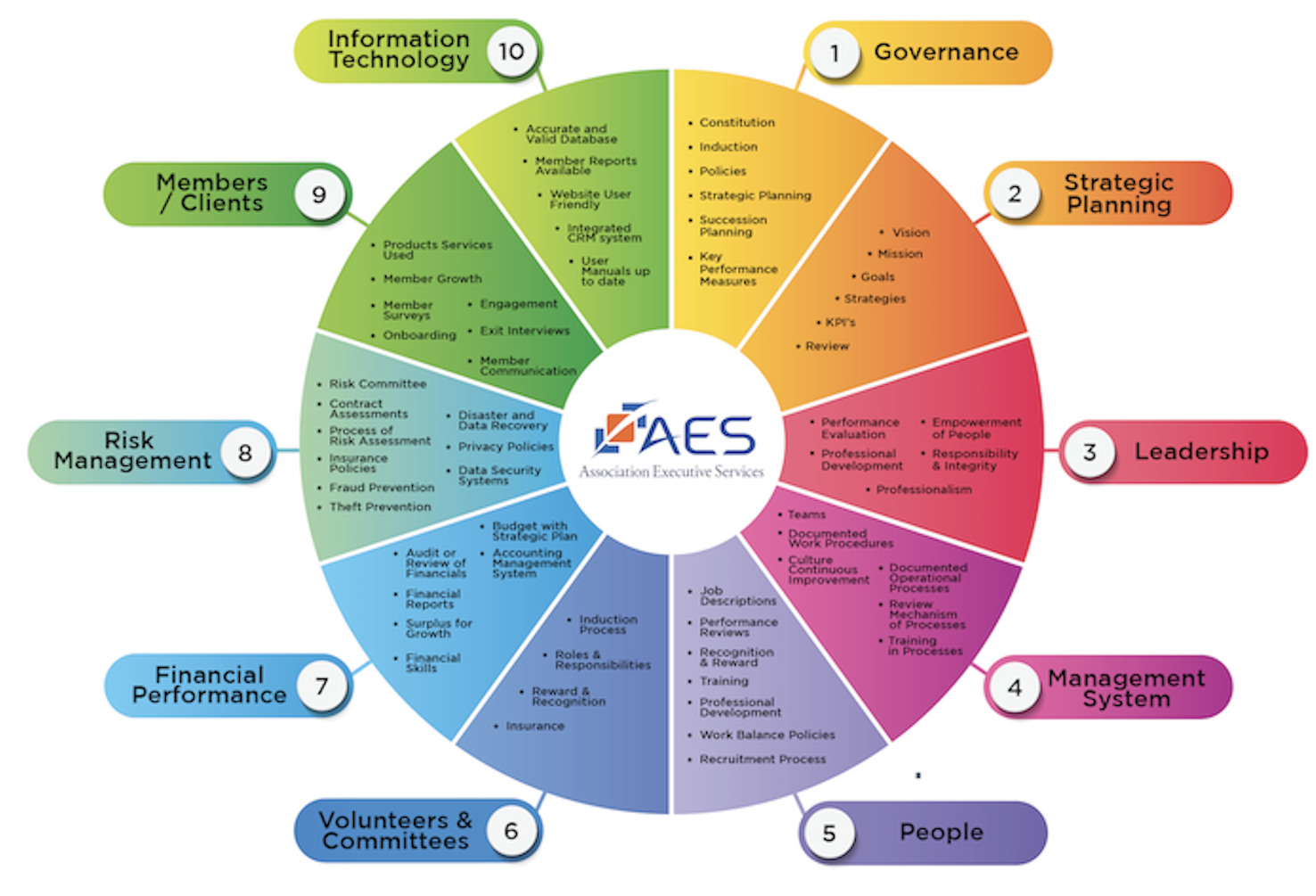
Association Executive Services (AES) is pleased to announce the launch of its 10 Areas of Best Practice for Associations Model. This Model will help associations attain the level of excellence they need to thrive.

Over the last 12 months, we have seen a high turnover of association leaders throughout Australia. While some of this turnover may have been planned, in many cases, association leaders have resigned from their positions, suffering from high levels of anxiety. This anxiety often results in a number of personal issues.

Over the nine last years, Association Executive Services (AES) has captured information about the performance of associations in Australia. Using the AES Association Best Practice Self-Assessment tool, we have gathered data from over 450 association leaders. All these association leaders have self-assessed their organisation against 10 key areas:

In a recent meeting with a CEO of an AES member association, the issue of obtaining a quorum to run the Annual General Meeting (AGM) was discussed. At the member association's recent AGM, there were not enough members present to constitute a quorum because the association had adopted the Model Rules. The President was very anxious that the Model Rules allowed only members to attend, rather than a quorum, which he believed posed some risks to the association.

For many associations, the Annual General Meeting (AGM) is not the most popular meeting—it tends to be a very dry and formal process that does not allow for a lot of debate regarding the management of the association.

The majority of associations produce some type of magazine, usually included as part of a member benefit package. And, unfortunately, for the majority of associations, the task of compiling their quarter magazine can be arduous, and seemingly without return.

AES members include both Board members and executives such as CEOs and Executive Officers, all of who may need to obtain legal advice at some stage. For the last 15 years, I have been a friend of John Crosby a very experienced Barrister and Solicitor and former General Council for Shell Australia. He has been my legal mentor since then and I would like to share in this newsletter some of what I have learnt when seeking legal advice.

Associations can be very dynamic organisations. They can bring together like minded members to share information, ideas, and best practice processes within their industry or area of interest.

Have you recently been appointed to a mangement position within an Australian association? Do you have questions about finance and tax? Not sure if you need to complete a self assessment? Don't understand the difference between an audit and a review? Or unsure as to how much surplus you should generate per annum?
How we help membership based, not-for-profit associations now and into the future.