Join
AES
Join
AES
Contact
Us
Contact
Us
Join our community and get the latest updates for the NFP sector in the AES newsletter. Offering a range of information and resources to help you build the strongest NFP organisation possible, and achieve success where it matters to you most.

For leaders and executives within industry associations and not-for-profit organisations, the shift to remote working arrangements has presented both opportunities and challenges. Ensuring a seamless transition without compromising on the essential functions of the organisation is crucial. The recent case of Suzie Cheikho v Insurance Australia Group Services Limited presented at the Fair Work Commission provides invaluable insights into navigating this complex terrain.

Navigating the complexities of legal advice? Dive into insights from AES Legal Advisor John Crobsy. From the nuances of 'confidentiality' and 'privilege' in solicitor-client communications to the intricate landscape of legal pricing—whether hourly rates, scale costs, or contingency fees.

Inbox overflowing? Email has become such a large part of everyday life that most of us receive dozens of emails a day, ranging from important work information through to spam from companies and brands. Unfortunately, with such a volume of messages, it can be easy for important emails to get lost, be forgotten about, or left in the “think about it later” basket for too long. A great way to avoid your important email message getting left behind is to avoid sending it as an email altogether. We take a look at when it’s a good idea to pick up the phone.

Membership is a central concern for every association. Growing
your membership base,
retaining members, and ensuring your members are engaged in your association’s functions and activities should all be key parts of your
strategic plan. Even associations with a large and diverse membership need to be consistently evolving and planning to offer value to their
members and to ensure they stand out from the crowd. We consider the main things to focus on when thinking about your membership.

A new year is a great time for association leaders to take a look as their leadership style and reflect on how they could adopt new approaches to improve in 2023. From inclusivity and mental health awareness, to managing competition between and giving feedback to employees, we take a look at the key trends to have on your radar.

Are you ready to formulate and implement your strategic plan for 2023? While your association’s leadership team may be well versed in creating a plan for your future strategic direction, there could be emerging trends and considerations that you haven’t factored into your planning process. We take a look at the key trends that should be on your radar.

Humans have survived and evolved by blending in. As a species, we didn’t go to the edge of the forest and yell at the wild beasts on the savannah. We learnt to hide, to be inconspicuous. We learnt not to be different because standing out meant death. For brands and leaders, the rules are different. Being brave enough to stand up and stand out is rewarded.

With the new year fast approaching, now is the time to ensure your key documents are ready to help you achieve success in 2023. Central to this is your association’s strategic plan, which provides an overview of your goals and direction. But if you feel that your strategic plan hasn’t been well utilised by your Board this year, you need to make changes to ensure that your plan is being regularly reviewed and is working as well as it could to help your association achieve its objectives.

Is your association operating at the best of its capabilities? For an association to be performing well, it needs to be involved and invested in a range of activities and programs that offer benefits to members and that contribute to the overall goals of the organisation. From creating a value-adding range of products and services, to hosting informative and engaging events, to working with strategic partners, there are many ways that an association can ensure it is achieving its objectives now and into the future.

A positive work culture achieves more than just happier and healthier employees; it increases productivity, improves outcomes, and leads to long-term growth and success. However, cultivating this kind of culture and a workplace where employees want to grow and succeed isn’t easy. With a new trend of resignations and disengagement, it is now harder than ever to keep the best talent at your association.

When running an association there are many different factors that make it successful. One of the most important keys to a thriving
not-for-profit organisation is effective marketing. Marketing is the way you get your association out there. It helps you to build a large
membership base, to promote your goals and drive traffic to your website. It is also a tool for developing a strong brand identity and to
connect with potential members, sponsors and more.
.jpg)
Once you've established your association, created a constitution and elected your board members, there are several policies and procedures that should be put in place to ensure the effectiveness and wellbeing of your organisation. These policies must be carefully constructed – if you do not take the time to implement detailed procedures then your association can quickly crumble.

In any organisation the Treasurer bears the responsibility of managing its finances and overseeing all financial decisions. In a not-for-profit (NFP) association, much of the success of the organisation rests in its ability to acquire and appropriately utilise funds and thus the Treasurer plays an essential role in the NFP achieving its goals.

If you're planning on hosting a conference in 2022, choosing a theme is an essential first step. Devising a theme that is exciting, relevant
and thought-provoking is vital. Your theme will guide panel discussions and inform the topics presented on by keynote speakers.
In this article, we delve into why setting your conference theme should be an essential part of planning a conference. We
also run through some tips on how to devise a theme that will help you build an engaging program

How can you promote a positive culture within your association while dealing with a member complaint? Here are 7 points to consider before responding.

Does your strategic plan utilise Key Performance Indicators (KPIs)? KPIs are an important and useful planning tool that can be used in a strategic plan to provide a greater sense of purpose and to demonstrate tangible results. A successful strategic plan will include several KPIs to manage and track progress and success. When creating your Association’s strategic plan, it can be helpful to begin with the goals you want to achieve and considering them in terms of outcomes with quantifiable results.

Why is it crucial that Associations have – and stick to – a strategic plan? A comprehensive strategic plan is the key to your Association’s ability to thrive and grow in a competitive, complex landscape. A strategic plan needs to clearly articulate your Association’s strategic priorities and how you are going to achieve them.

The Board of an association exists to guide the vision and strategic direction of the organisation. All Board members, along with the management team, are working towards this shared goal, which can sometimes make it challenging to decide who is responsibility for individual tasks. However, allocating specific roles and tasks to Board members helps to delineate between the responsibilities of the Board and those of the executive.

Creating a successful and high-functioning association Board is one of the most challenging aspects of association governance, but it is also one of the most important. A great Board will create a clear vision for the association, strategise for a successful future, mentor the executive of the association, advocate in external circles, identify opportunities and clear the path of obstacles.

Last month, Association Executive Services hosted a webinar focussed on advocacy to government, both during the COVID-19 pandemic and afterwards. The objective of the webinar was to explore traditional methods of influencing government policy, how those have changed in the last two years, and how associations can build strong working relationships as we move into a post-pandemic recovery.

Association Executive Services recently distributed a survey to Australian associations seeking information on the technology they are using, including the costs of this technology, the challenges they have encountered, and any solutions they have found. The survey also focused on how they are thinking about technology into the future, and which platforms or software they are prioritising.

At this time of year, many associations are busy sending out renewal notices to members. Retaining membership numbers year to year is a vital part of keeping an association sustainable and relevant. In fact, as much effort should go into your member retention strategy as does to your efforts for member acquisition.

After two years of cancellations, postponements, and numerous challenges when it comes to hosting and attending live events, many of us are keen to get back into “business as usual”. But although associations are planning to resume live member events in 2022, the general feeling amongst association leaders about planning events and conferences for next year is “steady as it goes.”

Working within a COVID-19 world has forced many association leaders to rethink how they will manage their organisation in the future. With changes to the way associations can run events, engage with members, and continue to offer value, it is important that all organisations are able to be flexible and adapt.

Associations rely on their Board members to ensure proper Governance and to develop and implement strategies and policy. Many associations in Australia are fortunate enough to have their members seeking positions as Board members, but at the same time other associations can struggle to attract members.

Have you had to deal with internal theft in your Association? Theft can be extremely damaging to an association of any size. To prevent it, safeguards must be put in place and managers need to be aware of potentially problematic behaviour.

Throughout Australia, many not for profit organisations are in the process of conducting their Annual General Meeting (AGM) of members. This is a legal requirement where the Board must organise an annual meeting of members.

An interim CEO can be a valuable tool in ensuring continuity of operations and effective change management when an association loses their CEO. This crucial role within the management team requires an experienced and skilful person, and the Board should not rush the recruitment of a new CEO. Instead, an interim CEO can be used to handle operations and maintain the association’s objectives.

Associations offer a multitude of benefits to members, but sometimes members can be forgotten. When this happens, it’s important that contact is reinstated and members are made to feel valued by the association. This way, they’ll be more likely to continue to renew their membership and be more involved in the association’s events and activities.

Every association needs to have a clear value proposition to encourage new members to join and existing members to continue being involved. As revealed in recent research, networking rates as one of the greatest benefits valued by professionals, who appreciate associations that facilitate this activity.

Boards and management of associations have very different roles, and it’s important that these are clearly defined to ensure that everyone is completing their own responsibilities. Blurred lines when it comes to the roles of governance and of management can cause delays and frustrations on all sides, leading to a less successful organisation and negatively affecting the ability to achieve the overarching goals of the association.

Any association with newly elected Board members must ensure their Board members are fully aware of their responsibilities before they are appointed. A thorough induction process with key senior figures ensures individuals are able to start meaningful work on the Board from the outset.

One of the major differences between not-for-profit organisations and other entities is the reliance on volunteers. Volunteers can play an important role to support some or all of the administration activities, approve membership applications or facilitate the combined learning of the members.

Associations offer advantages to members throughout their careers and regardless of external factors, but their value is best realised when society is in turmoil. The past eighteen months have posed unprecedented challenges for people all over the world. While Australians have been relatively lucky in respect of the devastating impacts of the COVID-19 pandemic, our economy has inevitably been shaken by these global events. Being a part of an association offers members a myriad of benefits, especially during times of great uncertainty.

Ongoing lockdowns have presented an unprecedented challenge for industry associations that typically rely on in-person events and conferences to engage members and grow their membership base. With the majority of the Australian workforce now working from home, the opportunities to connect are more limited.

One of the services that AES has offered to associations for a number of years is the provision of an interim CEO. Often, this service is utilised by association boards that are in a transition phase, defined by the recruitment of a new CEO.

As we move into an increasingly digitised world, the threat of cyber-attack is growing. Regardless of the size of an organisation, cyber-criminals can infiltrate your systems and target you for payment. Payments made to cyber criminals typically cannot be recovered, so it is vital that associations understand the risks and take action to strengthen their cyber security.

I recently spoke to AES Legal Advisor John Crosby about how Copyright can apply to associations and some things to watch out for.

Many associations rely on events as a major source of revenue. With business events cancelled and postponed over the last 18 months due to COVID-19, this has significantly impacted association revenue.

One of the biggest challenges facing many associations today is the rapidly changing pace of technology. Today, new and improved technology is enabling associations to provide services, manage the organisation's day-to-day functions, and communicate with members in a way not previously possible.

Associations can be very dynamic organisations. They can bring together like minded members to share information, ideas, and best practice processes within their industry or area of interest.

Each year, association and not-for-profit Boards need to ensure that their organisation is compliant with all requirements imposed by the relevant regulators and government departments, particularly the Australian Tax Office.
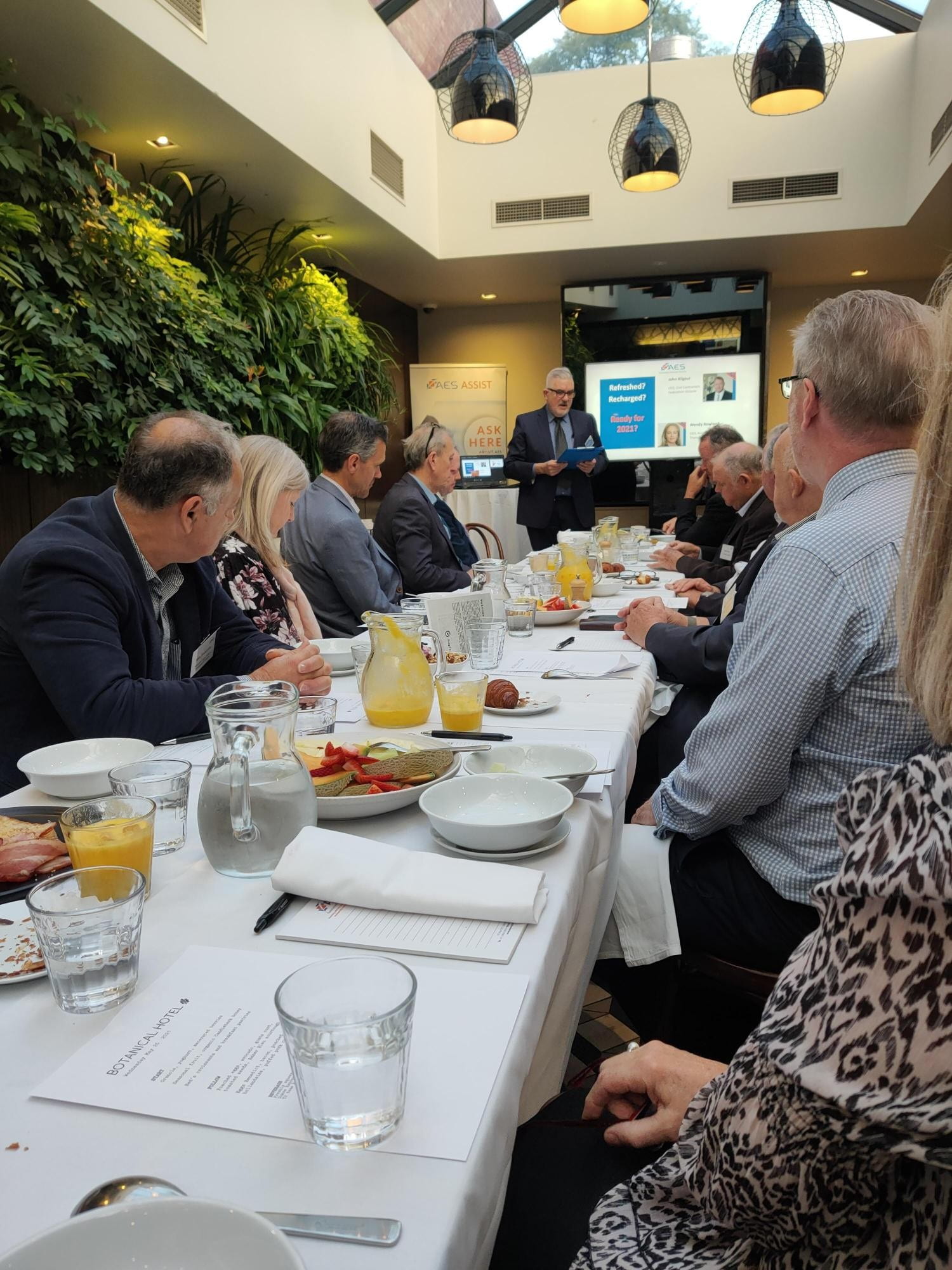
Association Executive Services (AES) hosted its first face-to-face event since COVID-19 yesterday: a breakfast attended by over 20 association leaders in Melbourne. The theme for the event was Refreshed Recharged and Ready for 2021.

Most associations send out a membership invoice subscription to their members either once a year or on the anniversary of their joining. Membership subscriptions can present a range of issues for associations. In particular, pricing can be a dilemma each year. Is your pricing structure right? Are your members going to be pleased with the subscription price? Do you need to increase the price? These are all questions your Board of Directors should review (and answer) each year.
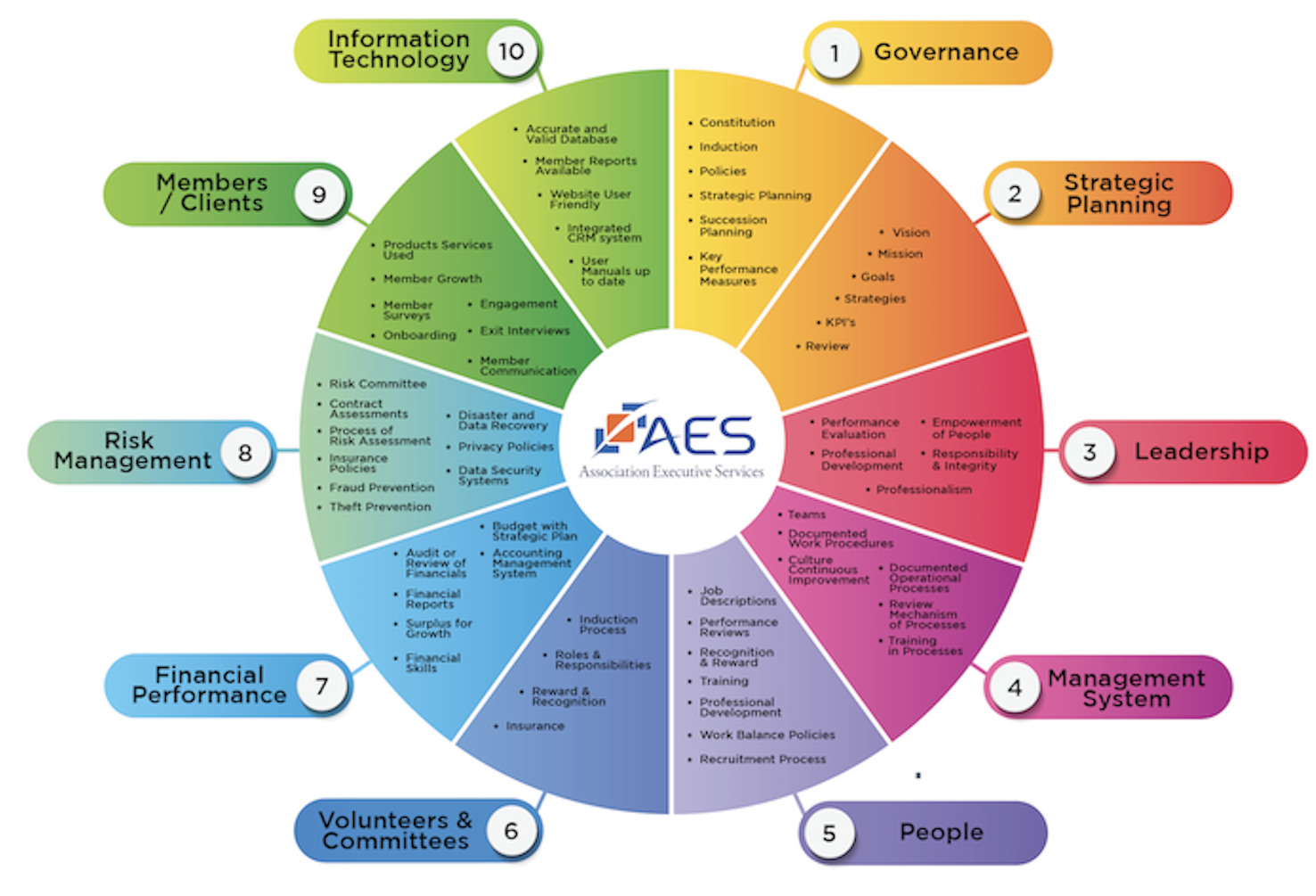
Associations (and their members) come together to represent a specific purpose and to forward the interests of a specific group of people. More and more, members’ expectations of the services, support, advice and benefits delivered by their association are on the rise. As such, association leaders must be able to demonstrate to their members that they are meeting industry best practice, and that the needs of members are being met.

It’s now over 12 months since the outbreak of the COVID-19 pandemic, and yet, its influence on associations throughout Australia is still being felt. Many association leaders have had to revisit their membership engagement and marketing strategies to ensure that their existing members renew and new members are attracted.

In September 2020, the Federal Government announced that they would commit $50 million in grants to support business events.

With the Federal Government's $50 million business grants program largely excluding associations from the initiative, some of the State Government funding initiatives may be more beneficial for Australian associations.

Registering as a charity under the Australian Charities and Not-For-Profits Commission (ACNC) might seem like a good idea. It certainly affords charitable not-for-profit organisations the opportunity to gain exemptions from income tax, and enables them to apply for certain categories of deductible gift recipient (DGR) status.
The AES team has recently facilitated several virtual Annual General Meetings (AGMs) for its clients and members. During each of these AGMs, we noticed some similar behaviours that we feel need to be addressed.

Professional Advantage and AES have come together to facilitate a series of webinars that will be rolled out over the next six months or so. The purpose of the series is to bring association leaders and professionals together, and have them share their strategies and experience to help one another recover from the impacts that COVID-19 has had on Australian associations.

In the course of their careers, all association leaders would have experienced a situation in which a member has acted inappropriately, requiring disciplinary action by the association. This disciplinary action may have required expulsion of the member from the association, society, or club.

It is highly likely that your association’s Annual General Meeting (AGM) has been, or will be, affected by the COVID-19 pandemic. With restrictions on large gatherings, as well as travel bans and self-isolation measures, holding an AGM in-person in 2020 is highly unlikely, particularly if you are located in Victoria.

The COVID-19 pandemic has challenged our daily operations, and impacted our abilities to plan face-to-face events. But it has also allowed us to think of creative ways to meet virtually.

As everyone is aware, Melbourne is now subject to Stage 4 COVID-19 restrictions, which impose significant responsibilities on businesses and, therefore, associations.

In a COVID-19 environment, many associations are struggling to engage with their members, resulting in a decline of membership renewals and an inability to attract new members.

Of the many ramifications that the COVID-19 pandemic has had on associations, its impact on events and conferences has been one of the most significant.

Association Executive Services recently hosted a webinar that discussed the future of association events and conferences in Australia in a COVID-19 world, featuring a panel of legal, insurance, health and association events experts.
Membership fees are annual $750 per annum and includes all staff and board members. AES conforms to Australian Consumer Law and Privacy Act 1988. AES has the right to change any of the benefits as required.
How we help membership based, not-for-profit associations now and into the future.